
Australia’s off‑road tracks are some of the toughest in the world. From muddy clay ruts and rocky fire trails to unexpected water crossings, your suspension and tyres aren’t the only parts under stress.
Your CV boots sit low and exposed, right in the firing line of mud, stones and water. Once they’re torn or cracked, it’s only a matter of time before your CV joints fail—and that’s when the big drivetrain bills start.
This guide explains:
- How Australian conditions attack CV boots
- The specific risks from mud, stones and water crossings
- Practical ways to protect your CV boots
- Why a Kevlar CV Boot Guardian cover is a simple, long‑term solution
What Your CV Boots Actually Do (And Why They Fail Off‑Road)
CV (constant velocity) joints let your wheels move up and down with suspension travel while still transmitting drive from the gearbox or differential.
They’re packed with grease and covered by a flexible rubber CV boot that:
- Keeps grease in
- Keeps water, mud, sand and stones out
- Allows full range of suspension and steering movement
Off‑road, that thin layer of rubber is the only barrier between your expensive CV joint and everything the track can throw at it.
Once the boot:
- Splits or cracks
- Gets punctured by stones
- Is weakened by heat, chemicals or UV
…contamination gets in, grease leaks out, and the CV joint starts to wear rapidly.
How Australian Mud, Stones & Water Crossings Damage CV Boots
1. Mud: The Silent CV Boot Killer
Australian mud is often a mix of:
- Clay
- Fine sand
- Organic matter
- Sometimes salt (in coastal areas)
Problems it causes:
- Abrasive paste: When mixed with sand, it becomes a grinding paste against the rubber.
- Trapped moisture: Mud that cakes around the boot holds water against it, accelerating rubber degradation and corrosion.
- Weight & imbalance: Heavy buildups put extra strain on the boot and clamps.
Result: Micro‑cracks form, the rubber weakens, and a small split goes unnoticed until the CV joint starts clicking on turns.
2. Stones & Gravel: Impact and Cutting Damage
On rocky fire trails and gravel roads:
- Stones are thrown directly at the spinning CV boots
- Sharp edges slice, nick or puncture the rubber
- Repeated impacts “chip away” at already aged boots
Even small cuts are enough to:
- Let grit and water in
- Allow grease to sling out at speed
Result: Rapid wear of the CV joint and potential failure far from home.
3. Water Crossings: Rapid Cooling & Contamination
Australian creek and river crossings add another layer of risk:
- Thermal shock: Hot CV boots and joints are suddenly cooled by cold water, stressing the rubber.
- Dirty water: Crossings often carry sand, silt and organic material that can enter even small cracks.
- Salt water: In coastal or tidal areas, salt accelerates corrosion of metal components inside and around the joint.
If a boot is already weakened, a few deep crossings can be all it takes for it to split wide open.
Signs Your CV Boots (and Joints) Are in Trouble
Watch for:
- Grease sprayed around the inside of your wheel or suspension
- Visible cracks, splits or missing chunks in the rubber boot
- Clicking or knocking noises when turning under power
- Vibration under acceleration
Finding these issues before a trip is ideal. Discovering them halfway through a remote trip can end your adventure.
Protective Options for Off‑Roaders
Common approaches:
- Regular inspections – Essential but reactive; you’re still waiting to see damage.
- Boot replacement with OEM parts – Restores the original protection, but doesn’t change the fact that it will see the same harsh conditions.
- Upgraded rubber/silicone boots – Slightly better durability, same vulnerability to cuts and abrasion.
- External protective cover (like CV Boot Guardian) – Adds a tough outer shell over your existing boot.
The most effective setup for serious off‑road use is:
Healthy OEM or quality replacement CV boots + a dedicated protective cover over the top.
How CV Boot Guardian Protects Against Australian Conditions
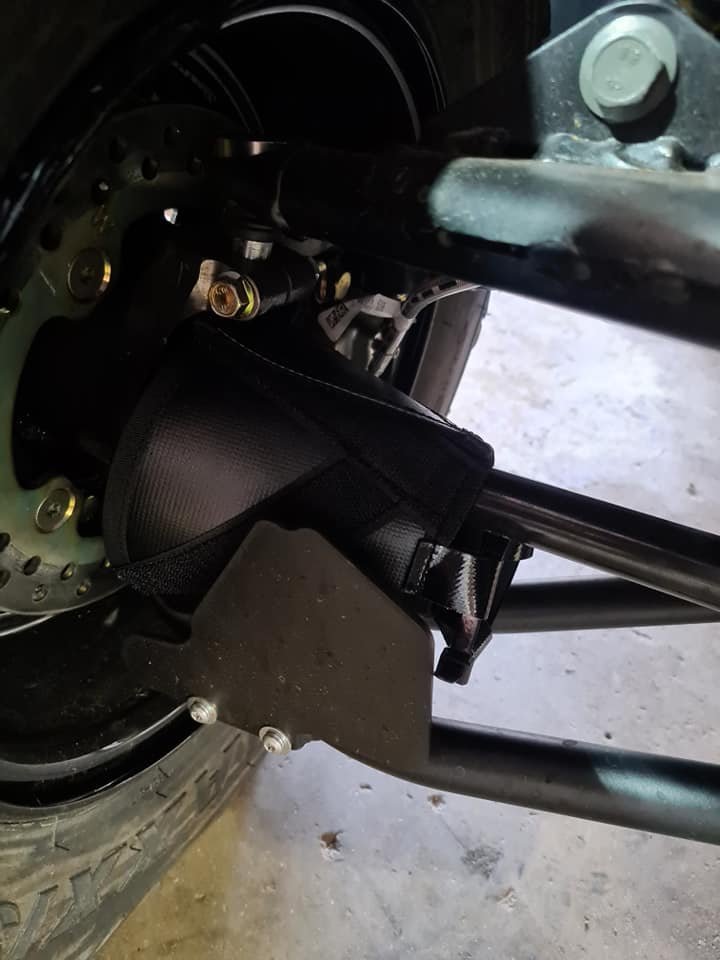
CV Boot Guardian is a Kevlar / aramid‑fiber cover designed to sit over your existing CV boots as a sacrificial, high‑strength outer layer.
Key protection points:
- Against mud:
- Smooth outer surface helps mud shed instead of packing around the boot.
- Tough aramid fibers resist abrasion from mud mixed with sand.
- Against stones:
- High cut and tear resistance protects the underlying rubber from sharp impacts.
- Deflects gravel and debris kicked up by the tyres.
- Against water crossings:
- Creates a second barrier around the rubber boot.
- Reduces direct exposure of the boot to sudden temperature changes and contaminants.
Additional benefits:
- Heat and chemical resistance: Designed to cope with grease, oil and high temperatures.
- Universal fit: Suitable for most ATVs, 4WDs and bikes with CV boots.
- Easy to install: Slides over the existing boot and secures with supplied fasteners.
Practical Off‑Road Tips to Extend CV Boot Life
Combine good habits with protection:
- Pre‑Trip Check
- Inspect all CV boots for cracks, splits, or grease leaks.
- If they’re aging but still intact, add CV Boot Guardian covers before the trip.
- During Your Trip
- After deep mud or water, check under the vehicle when practical.
- Remove heavy mud build‑up around boots and suspension components.
- Post‑Trip Clean & Inspect
- Rinse underbody thoroughly, especially after salt water or beach driving.
- Check that CV Boot Guardian covers are secure and undamaged.
- Look for any fresh grease or tell‑tale cracking on the inner boots.
FAQ: CV Boot Protection for Australian Off‑Roading
Q: Will adding a cover make my CV joints run hotter?
A: The covers are designed to allow adequate airflow and are made from heat‑resistant material. In normal off‑road use, they won’t cause problematic heat build‑up.
Q: Do I still need to inspect my CV boots if I’m using CV Boot Guardian?
A: Yes. The cover dramatically improves protection, but regular checks are still good practice—especially before big trips.
Q: Are the covers suitable for lifted 4WDs and long‑travel suspension setups?
A: Yes. The material and design allow full suspension articulation without binding when correctly installed.
Australian off‑roading is brutal on exposed drivetrain components—especially CV boots. Mud, stones and water crossings all work together to cut, crack and contaminate them, leading to expensive CV joint failures.
By pairing healthy OEM boots with a Kevlar CV Boot Guardian cover, you:
- Add a tough outer shield against real‑world track conditions
- Greatly reduce the chance of sudden boot failure
- Protect your trip, your drivetrain, and your wallet
If you regularly take your 4WD, ATV or bike off‑road in Australia, consider fitting CV Boot Guardian Premium Protection Covers (Pack of 8) before your next adventure.
Leave a Reply